

Mastering the art of veneer application requires the right tools, a bit of patience, and a deep understanding of how wood interacts with adhesives. Whether you are using Pressure Sensitive Adhesive (PSA), contact cement, or traditional wood glue, the goal is always a permanent, bubble-free bond that showcases the natural beauty of the grain.
Before you begin, ensure your workspace is clean, well-lit, and climate-controlled. Wood is a natural material that expands and contracts with humidity; allowing your veneer sheets to acclimate to your shop’s environment for 48–72 hours is a critical first step for a successful install.
Use a Stiff Scraper
It's absolutely critical to use maximum pressure when smoothing out the veneer.
 Do not use a "J" roller to smooth out flexible veneer. Instead, use a scrap piece of wood approximately 12" long and 6" wide as a veneer scraper. Lightly sand the 6" edge to take the sharpness away and create a slight radius, the smaller the radius the better as it will produce the greatest pressure. A 1/16" radius will produce 4 time more pressure than a 1/4" radius. Holding the scraper with both hands and using it like a wooden squeegee smooth out the veneer from the center outward to the edges.
Have an Iron Ready
A warm iron (set between wool and cotton) may reactivate the cement and put “bubbles” down tight if enough contact cement was applied in the first place. If cement is too scant, the bubble will pop back up.
 When you put the iron on the veneer, be sure to use a piece of grocery bag-type Kraft paper under it to keep the veneer face clean.
Keep the iron in motion. If veneer should come loose under heat then reheat and scrape hard until the area cools down again.
Shine on It!
Shine a light cross the wood grain and quickly deal with any imperfections you see. Be satisfied all is okay before proceeding with finishing steps.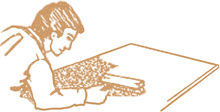
Stick to It!
When applying contact adhesive remember that MDF and plywood require different techniques. With MDF, one coat on the substrate and one coat on the veneer back is all that is required. However, on plywood, you must apply two coats to the plywood because plywood is much more porous and that will dramatically influence the glue line. What is necessary is to apply one thin coat and let it dry completely, then apply a second coat and that becomes your "tack coat". One coat is all that is necessary on the veneer. For more information, don't forget to check out our Wood Veneer Frequently Asked Questions page.
What is the best substrate for wood veneer?
For the most stable results, MDF (Medium Density Fiberboard) is the gold standard. Because MDF is engineered to be perfectly flat and non-porous, it provides a superior "glue line" compared to standard plywood. If you are using plywood, remember our two-coat rule mentioned above to ensure the adhesive doesn't soak too deeply into the grain.
Can I apply new veneer over an existing finish?
Yes, but the adhesive choice matters. For standard wood-backed veneer, we recommend sanding the existing finish down to the raw substrate. However, if you are using PSA-backed veneer, it is perfectly safe (and often preferred) to apply it directly over existing, smooth finishes like lacquer, polyurethane, or laminate. Just ensure the surface is completely free of wax, oils, or dust before application.
Trimming Your Veneer Sheets
Always cut your veneer slightly oversized (about 1/2" to 1" larger than your project surface). Once the bond is set and cured, use a sharp veneer saw or a flush-trim router bit for a perfect, clean edge. At Oakwood Veneer, we provide a generous trimming margin on our sheets to make this process easier for you.
Need Expert Advice?
If you don't see the specific answer for your project, it doesn't mean we can't help! Our warehouse is full of experts who live and breathe woodcraft every day.
Give the Oakwood Veneer team a call at 800-426-6018. Whether you need to troubleshoot a bubble or want to order a specific species for a custom build, we are here to help you get the job done right.